

A reflection by Jack McPherson upon finishing Patrick Deneen’s Regime Change
I have closed Regime Change with the unsettled admiration one feels toward a book that has diagnosed a real sickness and then reached for the wrong medicine. Deneen is right that a self-dealing managerial class will not reform itself by being asked nicely. He is right that the many possess a wisdom the few have forgotten, and right, in his sixth chapter, that what we most need is a new elite who hold their authority as a gift to be stewarded rather than a possession to be spent.
But when he turns to the means—fear, intimidation, the mobilized threat of the crowd—I find I cannot follow him, and finishing the book has clarified why. His error is not first political. It is anthropological. He has accepted Machiavelli’s account of what a human being is, and no Aristotelian end can be reached by a road that begins in that assumption.
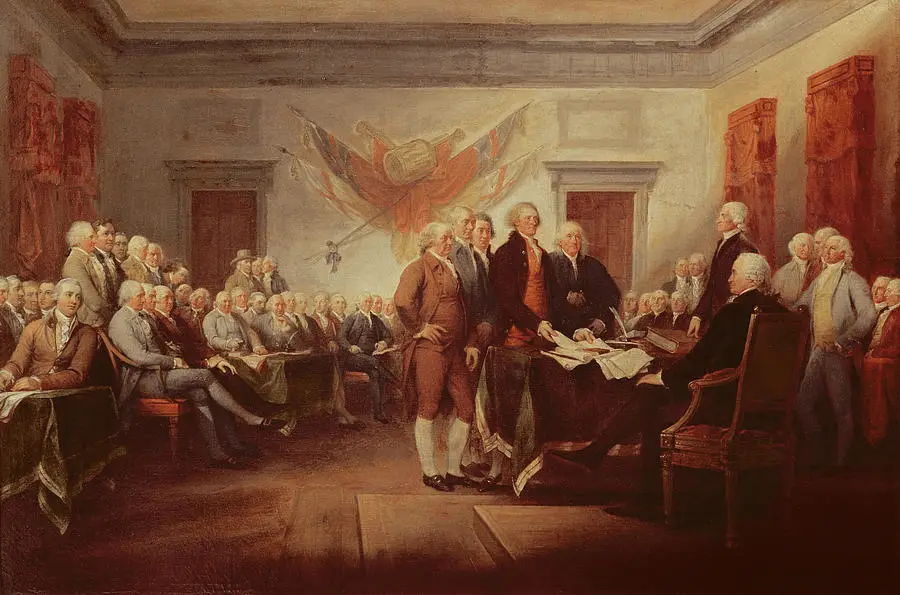
What struck me, closing the cover, is that the Founders had already refused Machiavelli’s anthropology while borrowing his realism—and that this refusal makes them, in a real sense, proto-personalist. I intend to explicate this notion in later works, but for now, it seems to me that the structure of the regime that our Founders built presupposes a truth about the person that the great contemporary philosopher Karol Wojtyła would later render explicit, and that contemporary theologian Josef Ratzinger then guarded against every political theology that forgot it.
Consider what Madison actually assumes about the human being. In Federalist 51 he grants that men are not angels, that ambition is ineradicable, that power seeks its own increase. This is simply crucial realism, from which Madison recommends a remedy, on which Deneen has apparently given up. Madison does not propose to master ambition by fear, nor to organize one class to menace another, unlike Machiavelli. Instead, he proposes to set ambition against ambition within standing law, so that no man’s passion can move except through channels that leave every other man free to answer. The auxiliary precautions are impersonal, general, prospective, and known in advance. They coerce no one in particular; they address every officeholder as a free agent who can foresee the consequences of his ambition and choose accordingly.
This is the whole difference between law and menace, and it is a difference about the person. Machiavellian intimidation, which Deneen seemingly flirts with and recommends adopting, works by bypassing reason and acting on the passions from outside—treating the other as an object to be moved. Madison’s architecture works by leaving reason its room and requiring that even ambition pass through the forum of consent.
That is the seed of Wojtyla’s personalistic norm two centuries early: the person may never be used as a mere means, and a rightly ordered polity is one in which even our vices are compelled to respect the agency of our neighbors rather than to override it. The Founders’ anthropology, then, is neither the Machiavellian pessimism that sees only the beast to be caged nor the Enlightenment optimism that forgets the beast entirely. It is closer to what I have come, in my own work, to call the constituted person—the human being understood as at once fallen and free, self-interested and capable of self-gift, requiring both the restraint of law and the dignity of participation. Original sin without despair; freedom without illusion.
The people are the residual claimants of all authority precisely because they are the sort of beings whose consent is not a formality but the very form through which a just power lives. When I argued, in my Article V essay, that the States mediate the people’s will without watering it down, I was describing this same anthropology from another angle: mediation that honors rather than distills the agent is only possible if the agent is a person whose acts are his own.
Here the accord with Wojtyła becomes exact. In The Acting Person he shows that action does not merely produce outcomes; it constitutes the one who acts. A regime that forms its citizens through participation forms participants; a movement that forms them through drilled antagonism forms antagonists—and arrives at its “Aristotelian” destination carrying the very persons its means have made.
This is why Deneen’s bridge of intimidation (if it’s even just a bridge and not the whole foundation) cannot reach the far bank he wants. And it is why the Founders’ patient, lawful architecture is not squeamishness but wisdom: they built a house in which the people could act as persons, in solidarity and even in opposition, without ceasing to act with one another. Wojtyła names that opposition-within-solidarity as an authentic form of participation, not its rupture. Ratzinger, for his part, would remind me that the polity is the realm of prudence and not of redemption—and the Founders, refusing to immanentize any final good, left room in their constituted order for the very reserve he insisted upon: politics that knows it is not the Church.
Deneen–that intelligent man–should know better. The Founders were realists about what we are and reverent toward what we are for. That double vision—fallenness met by form, freedom secured by consent—is where the American beginning already reaches toward Kraków and Regensburg. The means that Deneen would use cannot honor it. The means that the Founders bequeathed us still can.